
Selective Pallet Racking
Selective pallet racking fitted with wire decking across each level.
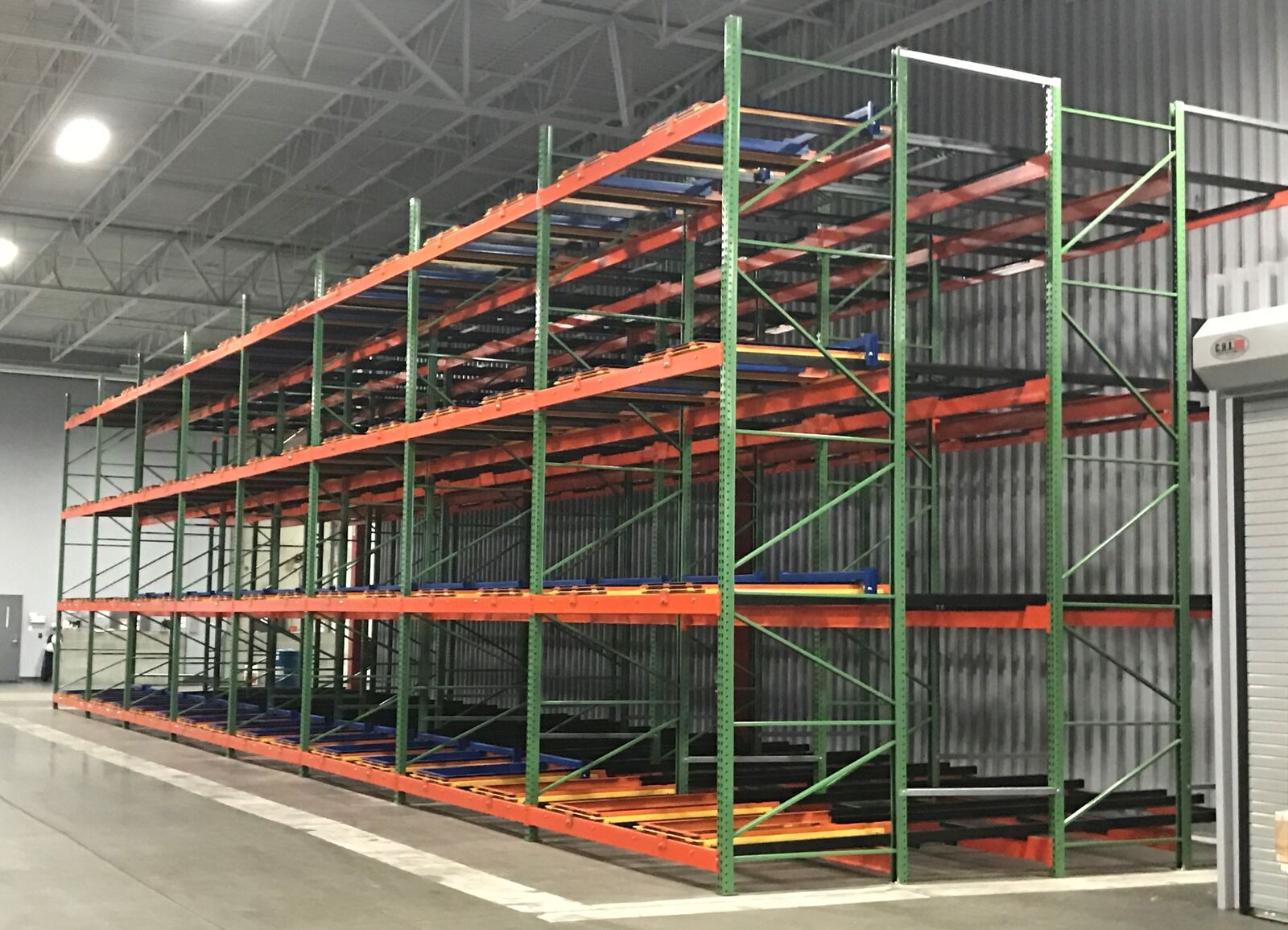
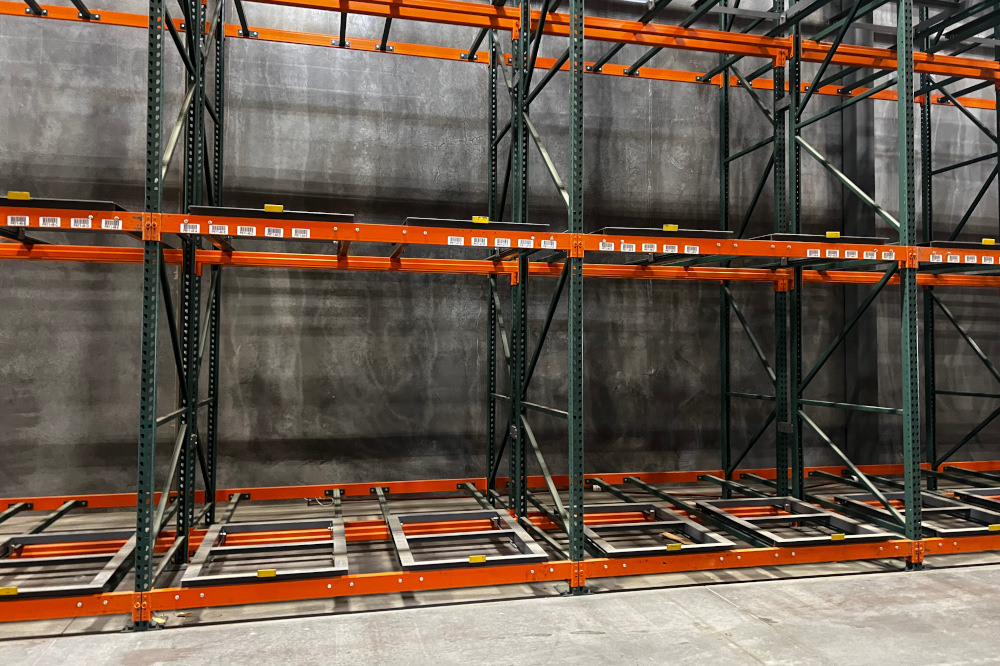
Pushback rack in Port Tampa Bay can consolidate repeated import pallets without assigning a separate aisle to every row. Lanes typically hold two to six pallets deep, with the depth chosen around actual receipts and withdrawals rather than the largest possible storage block.
For freight support and container-related distribution, the important distinction is access by lane instead of access to every pallet. Nested carts travel along inclined rails, allowing replenishment and withdrawal at the same face while fewer aisles occupy the reserve footprint.
We establish pallet dimensions, loaded height, weight range, and expected pallets per SKU. Comparing two-, four-, and six-deep options exposes the trade between available lane faces and the volume held behind each face. FIFO perishables call for flow storage or another arrangement with access to the earlier receipt.
The design identifies the beam pair per level and the frame spacing needed for the selected cart-and-rail package. Beam capacity, connection type, rail support locations, and loaded clearance must be considered together; ordinary selective dimensions are not an automatic match. A frame rating also depends on upright height and vertical beam spacing. Check it against the combined lane loads, alongside the rating of each beam pair per level; load plaques record the approved limits.
For additions, we identify the existing frame connection and verify matching beam connectors before specifying new components. Installation crews are scheduled and managed around agreed receiving areas, with assembly alignment and representative loaded movement checked before operational handover.
Port Tampa Bay warehouse racking · Pushback system options · FIFO lanes in Port Tampa Bay · Deep reserve storage in Port Tampa Bay
Understand the loading sequence before choosing a lane depth. Each lane needs compatible pallets and a clear rule for which stock belongs together.
The initial pallet rests on the cart presented at the aisle. Its dimensions, underside, and weight must suit the specified assembly; overhang cannot interfere with neighboring loads or the movement of the carts.
A subsequent load gently displaces the previous pallet toward the back. Nested carts ride inclined rails, supporting successive positions without requiring the operator to drive beneath stored freight.
Removing the front load allows the remaining pallets to move toward the aisle under gravity. Controlled forklift handling matters because the incline moves the remaining load train, not merely an empty cart.
Withdrawal follows last in, first out, or LIFO. Assign a lane to compatible stock and evaluate lot restrictions before replenishment; newer arrivals should not trap pallets that must ship first.
A container may bring many matching pallets, but departures can leave only two or three awaiting shipment. We compare those changing quantities with proposed lane depths so partially filled lanes do not undermine the position count shown on a drawing.
Selective storage keeps every pallet independently reachable; deeper cart lanes exchange that flexibility for density. Drive-in also concentrates inventory, but requires the truck to enter the storage lane. Here, the forklift handles pallets from outside the rack structure.
Port-area buyers work with Tampa Pallet Racks, a division of Warehouse Equipment & Supplies Co., supplying and installing warehouse equipment since 1997. Our planning connects inventory counts to lane assignments, then separates the new structure, cart assemblies, and installation scope in the proposal.
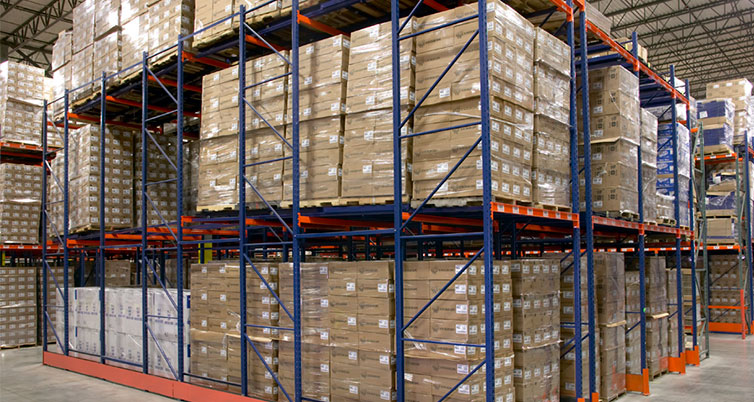
At Hookers Point, reserve positioning should leave container unloading and sorting space outside the rack face. A Port Sutton layout can separate industrial supplies from outbound staging; Port Redwing requirements may involve a different pallet mix. For cold or perishable freight, rotation requirements decide whether cart lanes belong in the plan at all.
A look at recent pallet rack installations across the Tampa Bay area.
Selective pallet racking fitted with wire decking across each level.

Selective pallet racking fitted with wire decking on each level, installed under a wood-truss roof.

Pallet racking set up with carton flow roller lanes on the lower levels.

Drive-in pallet racking built with deep bays that store pallets several positions deep.

Selective pallet racking fitted with wire decking across each level.

Selective pallet racking installed across a warehouse.

Selective pallet racking fitted with wire decking.

Selective pallet racking in a warehouse.

Push back pallet racking with nested carts that store pallets several deep from one aisle.

Selective pallet racking set up along a warehouse wall.
Send container quantities, pallet examples and temperature requirements so the free CAD plan and itemized quote address the intended freight reserve. Call (813) 723-3771.
7402 N 56th St.
Ste 355-580
Tampa, FL 33617
(813) 723-3771Monday - Friday: 7:00 AM - 7:00 PM
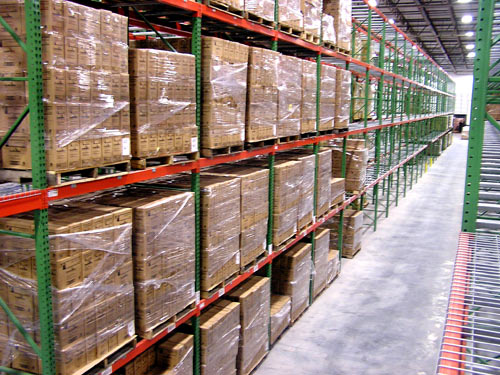
Every pallet reachable, every time. The baseline we size everything else against.
View details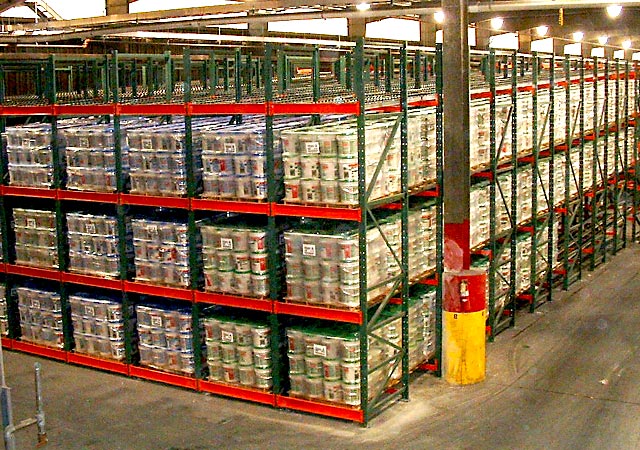
Load one side, pick the other, and let gravity enforce first in, first out.
View details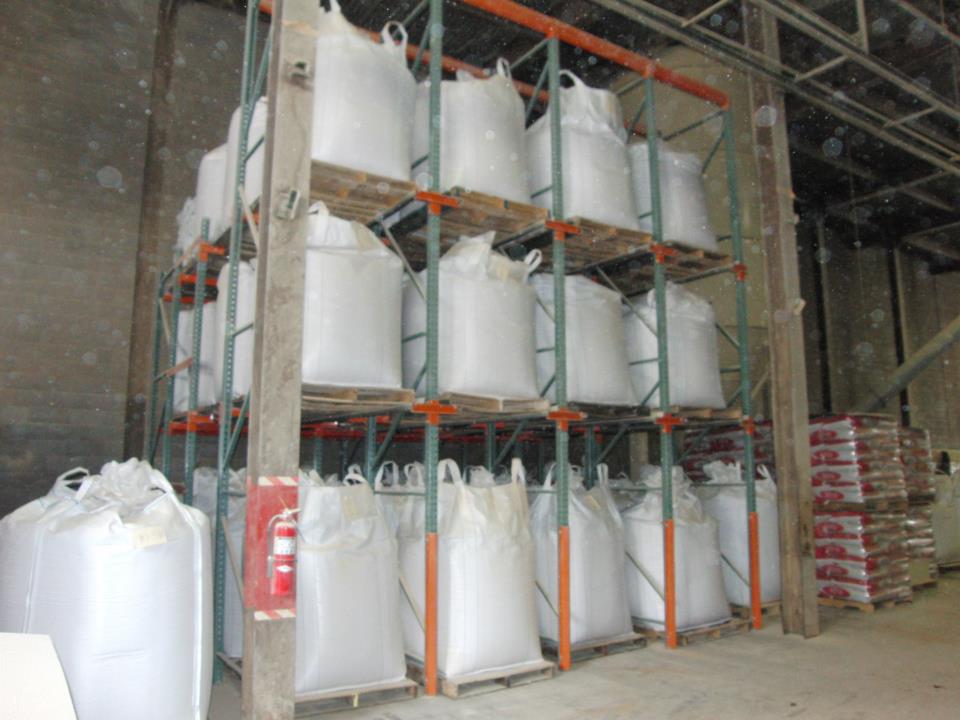
Forklifts enter storage lanes, reducing aisle space for large quantities of the same SKU.
View details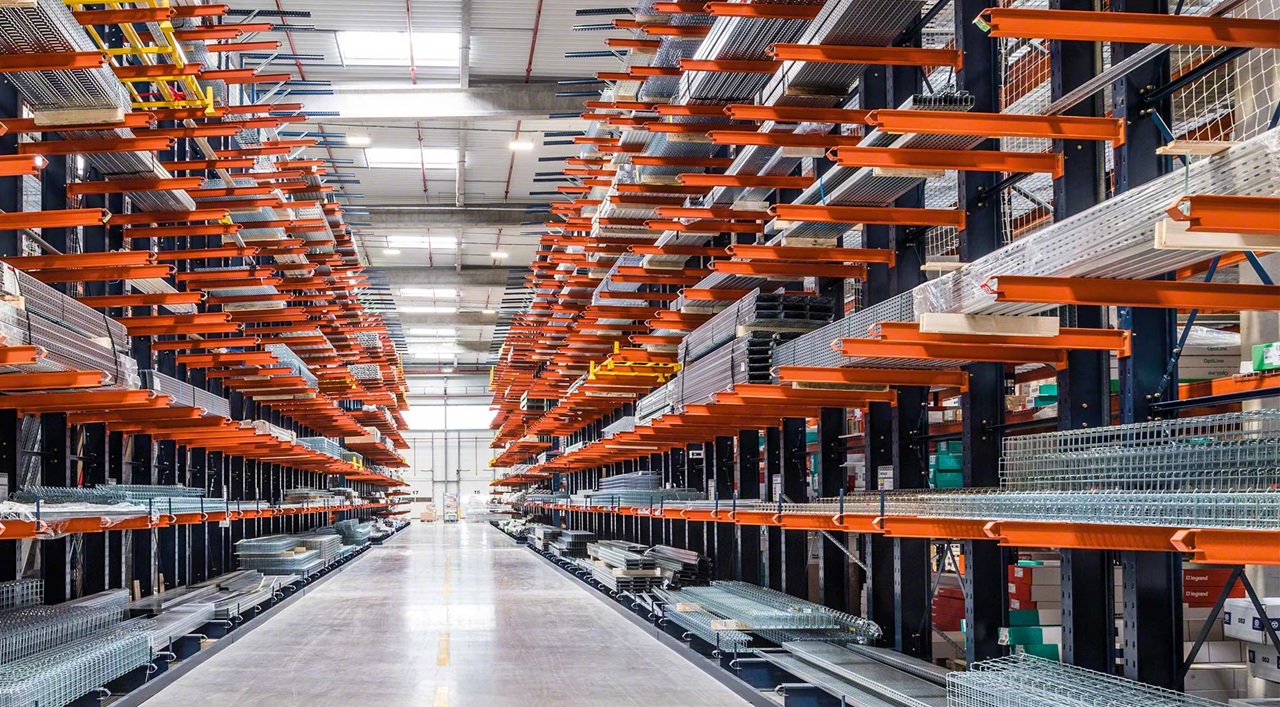
Arms with nothing in front of them, built for lumber, pipe, and anything a pallet can't hold.
View details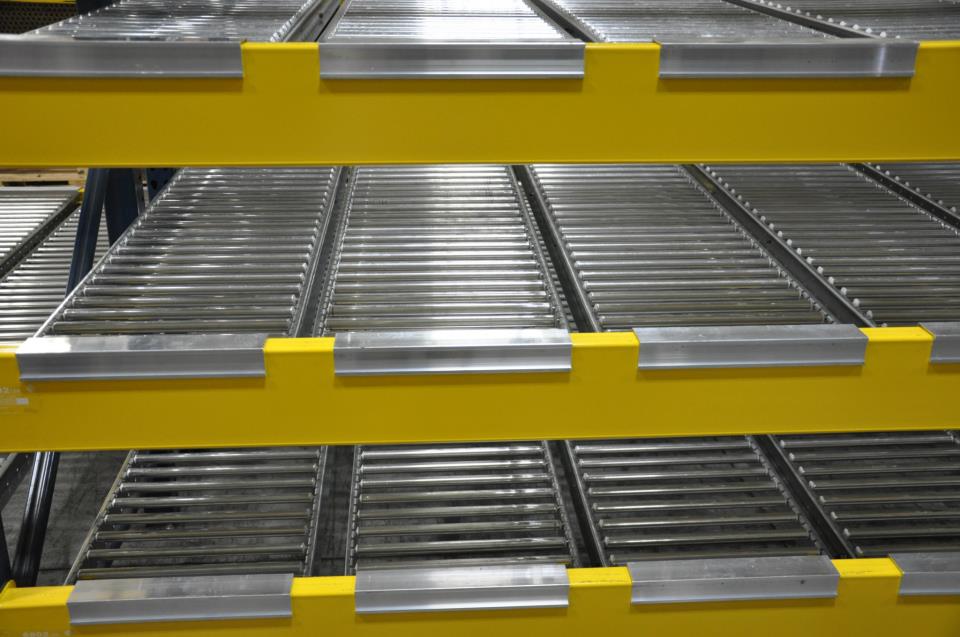
Cases advance to the picker instead of the picker hunting for cases.
View detailsOur delivery and installation territory covers Tampa Bay, so one team can handle multiple buildings for the same company.
Located in Tampa, we serve the entire Tampa Bay area with industrial pallet racks and warehouse storage solutions.
7402 N 56th St.
Ste 355-580
Tampa, FL 33617
Monday - Friday: 7:00 AM - 7:00 PM
Saturday: Closed
Sunday: Closed
Call (813) 723-3771 or request a quote and we will get a layout started.